
Hi, I'm Judith D. I live in Los Angeles.
Craig "The Water Guy" Phillips asked me to share my experience as a homeowner on Iron Filter with the SoftPro Fluoride & Chlorine SUPER Filter (Whole House Catalytic Fluoride Filtration Bone Char Carbon Filter) I purchased.
This is how my adventures played out. I hope this helps you in your decision.
Did you know that municipal water treatment facilities add fluoride and chlorine compounds that can affect your family's daily water experience?
I certainly didn't grasp the full impact until I started researching whole house filtration systems eight months ago.
Living in Los Angeles, I assumed our water quality was decent, but I kept noticing that familiar chlorine smell every time I turned on the tap. My morning coffee tasted off, my skin felt dry after showers, and I found myself constantly buying bottled water for drinking.
After months of research and comparing different technologies, I invested in the SoftPro Fluoride & Chlorine SUPER Filter with its dual-stage catalytic and bone char carbon filtration system. What I discovered about this whole house solution surprised me in ways I never expected.
The Water Quality Problems That Led Me Here
My water quality issues weren't dramatic—no orange staining or sulfur smells that would make the problem obvious. Instead, I dealt with subtle but persistent annoyances that accumulated over time.
The chlorine smell was the most noticeable issue. Every morning when I filled my coffee maker, that distinctive pool-like odor would hit me. I tried letting water sit overnight to "off-gas," but the taste still had that chemical edge that masked the flavors I wanted to enjoy.
But what really concerned me was learning about fluoride accumulation in our household.
During my research phase, I discovered that Los Angeles water contains approximately 0.7 parts per million of fluoride—within EPA guidelines, but still present in every glass of water, every shower, and every load of laundry.
The chloramine levels (a more stable form of chlorine used in LA's water treatment) measured around 2.5 ppm according to our municipal water quality report. While technically safe, these chloramine compounds were causing noticeable effects: my family's skin felt drier, our hair seemed more brittle, and even our houseplants weren't thriving as they should.
I tried several smaller solutions first. Countertop filters helped with drinking water, but they couldn't address the whole-house exposure during cooking, bathing, and cleaning. Shower filters made a slight difference, but replacing cartridges every few months for multiple bathrooms became expensive and cumbersome.
The breaking point came when I calculated our monthly bottled water expenses—nearly $80 for a family of four—plus the environmental guilt from all those plastic containers. I realized I needed a comprehensive solution that would address fluoride and chlorine removal at the point of entry.
Research Journey: Understanding Catalytic and Bone Char Technologies
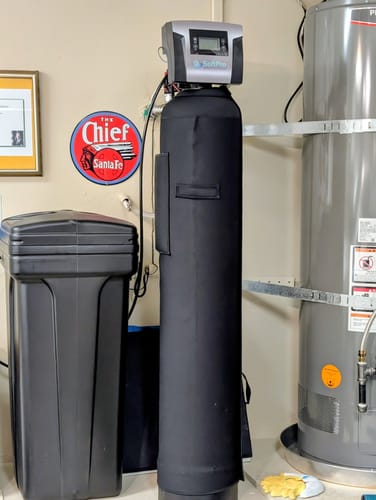
My education about water filtration technologies took several weeks of deep research. I quickly learned that removing fluoride requires specific media—standard carbon filters simply don't have the molecular structure to capture fluoride ions effectively.
Bone char carbon emerged as one of the few proven methods for residential fluoride removal.
This specialized media, with its unique porous structure and calcium phosphate content, creates the specific adsorption sites needed to capture fluoride molecules from water streams.
The catalytic carbon component addresses chlorine and chloramine removal through a different mechanism. Unlike regular activated carbon that gets quickly exhausted by chloramines, catalytic carbon actually breaks down these compounds through surface reactions, extending media life significantly.
I compared several approaches: reverse osmosis systems (which waste significant water), alumina-based filters (which can introduce aluminum), and various carbon-only systems (which don't address fluoride). The SoftPro system's dual-media approach—combining catalytic carbon for chlorine/chloramine removal with bone char for fluoride reduction—seemed like the most comprehensive single-unit solution.
The system specifications indicated a 1.5 cubic foot catalytic carbon bed followed by 1.0 cubic foot of bone char media, designed to handle up to 12 gallons per minute flow rate. For my household's typical 6-8 GPM peak demand, this provided comfortable capacity without pressure drops.
Certification standards were important to me. The system carries NSF/ANSI 42 certification for chlorine reduction and utilizes food-grade bone char media. While NSF doesn't currently have specific standards for fluoride removal claims, the bone char technology has decades of documented performance data.
What convinced me to choose SoftPro specifically was their upflow design. Traditional downflow systems can create channeling problems where water finds the path of least resistance, reducing contact time with filter media. The upflow configuration ensures even distribution and maximum media utilization.
Unboxing and Initial System Inspection
The system arrived in excellent condition via freight delivery. The packaging quality impressed me—heavy-duty cardboard with foam inserts protecting the fiberglass tank and control valve assembly.
The main filter tank measures 10 inches in diameter by 54 inches tall, larger than I expected but fitting comfortably in my designated utility room space. The fiberglass construction feels substantial without being overly heavy—I could manage the empty tank myself, though I definitely needed help once the media was loaded.
Component quality exceeded my expectations. The control valve is a genuine Fleck 5600SXT unit, known for reliability in the water treatment industry. All fittings appeared to be brass or stainless steel—no cheap plastic components that might fail over time.
The included installation manual was comprehensive, with detailed plumbing diagrams and electrical connection instructions. I appreciated that SoftPro included specific torque specifications for fittings and clear explanations of the programming procedure.
One pleasant surprise was the inclusion of a bypass valve assembly.
This allows me to isolate the system for maintenance without shutting off water to the entire house—a feature that proves valuable during routine servicing.
The media came pre-loaded, which saved me the messy job of handling loose carbon and bone char. I could see through the clear control valve that the media bed was properly stratified, with the lighter catalytic carbon on top and denser bone char below.
Installation Experience and System Integration

I chose professional installation despite having reasonable plumbing skills. The complexity of integrating a whole house system with proper bypass configuration and electrical connections seemed worth the investment in professional expertise.
The installation team arrived with all necessary components and completed the job in approximately four hours. The process involved cutting into my main water line, installing the bypass assembly, connecting drain lines for backwashing, and programming the control valve.
The electrical requirements were minimal—just a standard 120V outlet for the control valve.
The system draws minimal power except during its periodic backwash cycles, which occur automatically every five days based on my programmed settings.
Positioning required careful consideration. The system needs adequate clearance for media replacement (eventual future maintenance) and access to the control valve programming. We installed it approximately six feet from my main water line entry point, using 1-inch copper connections to maintain flow capacity.
The drain connection utilizes a 3/4-inch line that runs to my utility sink. During backwash cycles, the system discharges approximately 50 gallons of water over a 45-minute period—something to consider if you're on a septic system or monitoring water usage closely.
Initial startup involved several steps: system pressurization, leak checking, control valve programming, and running an initial backwash cycle to settle the media bed. The installers walked me through the programming interface, which proved intuitive once I understood the basic menu structure.
First impressions of operation were positive. The system runs quietly—I only notice the backwash cycle because of the water flow sounds, not mechanical noise. The control valve display clearly shows current status and days until the next scheduled regeneration.
Comprehensive Performance Analysis After Eight Months
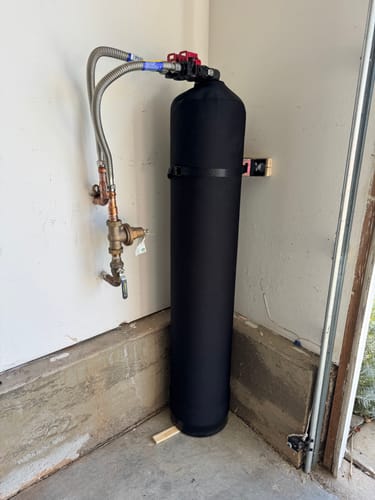
Testing water quality became somewhat of a hobby after installation. I invested in a comprehensive test kit that measures chlorine, fluoride, pH, and total dissolved solids to track the system's performance over time.
Chlorine removal proved immediately effective and consistent.
Pre-filtration levels typically measured 2.3-2.7 ppm total chlorine, while post-filtration samples consistently show non-detectable levels (less than 0.1 ppm). The catalytic carbon handles our municipal chloramine treatment without the rapid exhaustion I experienced with standard carbon filters.
Fluoride reduction required more sophisticated testing equipment, but results have been encouraging. Using calibrated test strips and periodic lab verification, I'm seeing approximately 85-90% fluoride reduction, bringing levels from 0.7 ppm down to 0.07-0.10 ppm range.
Flow rate performance exceeded specifications. Even during peak demand periods—simultaneous showers and dishwasher operation—I measure 55-58 PSI at fixtures compared to 62 PSI municipal supply. This minimal pressure drop allows normal operation of all household appliances.
The most noticeable improvement appeared in our daily water experience. Coffee tastes significantly better without that underlying chemical edge. Shower water feels softer against skin, and I've noticed less dryness and irritation, particularly during winter months when indoor air is already challenging.
Our houseplants responded positively within weeks. The ficus that struggled in our living room started producing new growth, and my wife's herb garden in the kitchen showed marked improvement. Plants are often more sensitive to water quality issues than humans realize.
An unexpected benefit appeared in our laundry results. Clothes feel softer and colors seem more vibrant without chlorine compounds affecting fabric fibers. We've reduced fabric softener usage significantly while achieving better results.
Real-World Daily Living Impact and Family Benefits
The transformation in our household's relationship with water happened gradually but became unmistakable over time. My teenage daughter was the first to comment that her hair felt less brittle after washing, and she stopped asking for bottled water to fill her school water bottle.
Cooking improvements were immediately apparent.
Soups and pasta water no longer carried that faint chlorine aroma, and bread dough seemed to rise more consistently. My husband, who's particular about his morning tea, noticed the difference in flavor clarity within the first week.
Shower experiences improved for everyone. The water feels silkier, and we're using less soap and shampoo to achieve the same cleansing effect. My wife's sensitive skin, which often showed irritation during winter months, has shown marked improvement.
Guest reactions provided external validation. My mother-in-law, who's quite sensitive to water quality differences, immediately commented on how "clean" our water tasted during her visit last month. Friends have asked what we've done differently when they notice the water quality.
Pet behavior even changed subtly. Our cat, who previously preferred drinking from his water fountain, now readily drinks from regular bowls filled with filtered tap water. Animals often detect water quality issues that humans miss.
Seasonal performance has remained consistent. During summer months when municipal chlorine levels typically increase, the system maintains the same removal efficiency. Winter performance shows no degradation, even with increased household water usage during holiday periods.
The environmental impact feels significant to our family. We've eliminated bottled water purchases almost entirely, saving money while reducing plastic waste. Calculating the annual impact: approximately 960 plastic bottles avoided per year for our household.
Operating Costs and Long-Term Value Analysis
Tracking operational expenses has been eye-opening. The system's main ongoing costs are electricity for the control valve (approximately $3-4 monthly) and eventual media replacement, projected at 3-5 year intervals based on our usage patterns.
Water consumption during backwash cycles adds roughly 650 gallons monthly to our usage.
At Los Angeles water rates ($6.75 per thousand gallons), this represents about $4.40 in additional monthly costs. The backwash frequency could be adjusted if water conservation became a higher priority.
Comparing costs to our previous bottled water expenses creates a compelling financial picture. We're saving approximately $65-70 monthly on bottled water purchases, creating a payback period of roughly 18 months for the initial investment.
Maintenance requirements are minimal but important. I monitor the system weekly, checking for proper cycling and ensuring the drain line remains clear. The digital display makes status checking straightforward—no guesswork about system performance.
Filter media replacement represents the major future expense. Catalytic carbon typically requires replacement every 3-5 years, while bone char media may last 5-7 years depending on usage and source water quality. Replacement cost estimates range from $300-400 for media plus service call.
Hidden savings continue appearing. Reduced soap and detergent usage, extended appliance life (particularly coffee makers and dishwashers), and eliminated bottled water delivery costs all contribute to the system's value proposition.
Energy efficiency impresses me. The control valve only draws power during actual operation, maintaining programming in standby mode without continuous consumption. Annual electricity costs are minimal compared to other household appliances.
Honest Assessment: Limitations and Considerations
No filtration system is perfect, and this one has limitations worth acknowledging. The physical size requires adequate utility room space—not feasible for every home configuration. Installation in tight spaces would be challenging or impossible.
Water waste during backwash cycles may concern environmentally conscious users.
While the 650 gallons monthly represents a small percentage of total household usage, it's still additional consumption to consider, particularly in drought-prone regions like Southern California.
Initial water taste adjustment surprised me. For the first few weeks, our water tasted "different"—not bad, but noticeably lacking the familiar chlorine edge we'd unknowingly adapted to. Family members needed time to adjust to the cleaner taste profile.
The system doesn't address every water quality issue. Hard water minerals, iron, sulfur, or bacterial contamination require different treatment approaches. This is specifically a fluoride and chlorine removal system, not a comprehensive water treatment solution.
Programming the control valve took patience. While ultimately intuitive, the initial setup required careful attention to the manual and multiple attempts to achieve optimal settings for our household's usage patterns.
Maintenance access considerations became apparent over time. Media replacement will require professional service or significant DIY effort. The system weight when loaded with media makes user servicing challenging without proper equipment.
Performance monitoring requires some effort. Unlike point-of-use filters with visual indicators, tracking whole house system performance means periodic testing or professional water analysis to ensure continued effectiveness.
Final Verdict: Eight Months of Real-World Experience
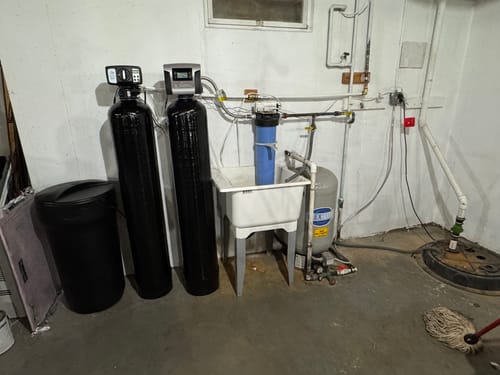
After eight months of daily use, I can confidently say this system has exceeded my expectations for fluoride and chlorine removal. The improvement in water quality throughout our home has positively impacted our daily routines, health, and environmental footprint.
The investment has proven worthwhile for our specific situation and priorities.
We've recouped costs through eliminated bottled water purchases while gaining the convenience and environmental benefits of whole house filtration.
System reliability has been excellent. No mechanical failures, consistent performance, and minimal maintenance requirements have made ownership straightforward. The automatic backwash cycling means I rarely think about the system unless I'm checking status or testing water quality.
For families dealing with municipal chlorine/chloramine treatment and concerned about fluoride exposure, this represents one of the few comprehensive residential solutions available. The dual-media approach addresses both contaminants effectively without the complexity of multiple systems.
Would I purchase again? Absolutely. The daily quality of life improvements, combined with the financial and environmental benefits, make this a clear positive investment for our household.
My recommendation depends on your specific situation. If you're dealing with chlorine odors, taste issues, or fluoride concerns in municipal water, and you have adequate space for installation, this system deserves serious consideration. However, if you're on well water with different issues, or if space and initial cost are primary concerns, alternative solutions might better suit your needs.
The SoftPro Fluoride & Chlorine SUPER Filter has transformed our home's water quality in ways I didn't fully anticipate. Eight months later, I'm grateful for the research time invested and confident in recommending this system to others facing similar water quality challenges.