
Hi, I'm Markus Keller, and I call Miami home. When Craig "The Water Guy" Phillips reached out asking me to document my journey with the SoftPro Fluoride & Chlorine SUPER Filter (Whole House Catalytic Bone Char Carbon Filter), I was happy to share the real story. Here's exactly how everything unfolded over the past 18 months, and I genuinely hope my experience helps guide your decision.
The Water Crisis That Started Everything
Did you know that Miami's municipal water can contain over 20 different chemical additives and treatment byproducts?
I certainly didn't until our family started experiencing issues that I initially attributed to everything except our water supply.
It began subtly in early 2023. My wife complained that her morning coffee tasted "off," and our teenage daughter mentioned that her hair felt dry and brittle despite using expensive conditioners. I dismissed these as coincidences until I started noticing my own symptoms.
The chlorine smell was overwhelming every morning when I turned on the shower. Living in Miami, I assumed this was normal for city water, but when house guests started commenting on the "pool-like" odor, I realized we might have a more serious problem than I'd acknowledged.
What really concerned me was discovering white, chalky residue building up on our fixtures and glassware. Our dishwasher, barely two years old, started leaving spots on everything despite using rinse aids. The ice maker in our refrigerator began producing cloudy cubes with an unpleasant aftertaste.
After some research, I learned that Miami-Dade's water treatment facilities add fluoride concentrations between 0.7-1.2 parts per million, along with chlorine levels that can spike during summer months when algae blooms require more aggressive treatment. The combination was creating a cocktail of chemicals that our family was consuming and bathing in daily.
I tested our water using a basic TDS meter and discovered readings consistently above 180 parts per million, with occasional spikes reaching 220 ppm during peak treatment periods. For context, the World Health Organization suggests that water with TDS levels above 150 ppm may have noticeable taste issues.
Research Phase: Understanding Filtration Technologies
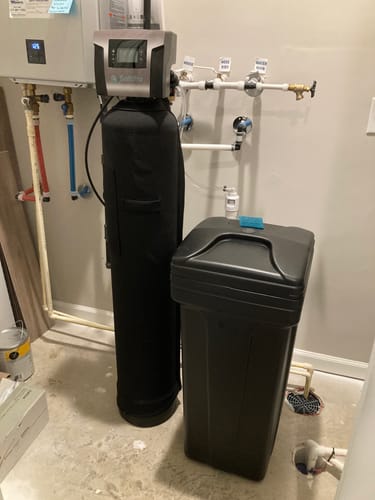
I spent three weeks researching whole house filtration systems, diving deep into the science behind different media types and their specific contaminant removal capabilities.
Initially, I considered basic carbon filters, but learned that standard activated carbon has limitations with fluoride removal and may not effectively address chloramines, which Miami-Dade occasionally uses as a secondary disinfectant during summer months.
That's when I discovered catalytic carbon technology. Unlike regular activated carbon, catalytic carbon is specifically engineered to break down chloramines through true catalytic conversion rather than simple adsorption. This means it actually destroys the chloramine molecule rather than just capturing it, resulting in much longer filter life and more consistent performance.
The bone char component intrigued me because of its unique fluoride removal capabilities. Bone char, made from cattle bones that are charred at high temperatures, develops a specific pore structure that mechanically filters fluoride ions. Research showed that bone char can reduce fluoride levels by 85-95% when properly implemented in a whole house system.
I also evaluated reverse osmosis systems, but the waste water production (typically 3-4 gallons wasted per gallon produced) seemed environmentally irresponsible for whole house applications. Plus, RO systems remove beneficial minerals that we actually wanted to retain.
The SoftPro system caught my attention because it combined both catalytic carbon and bone char in a single upflow design. The upflow configuration prevents channeling and ensures even media contact, while the larger tank size (10" x 54") provides sufficient contact time for effective contaminant removal at our household's flow rate of 8-12 gallons per minute during peak usage.
Decision Factors and System Selection
Several specific factors led me to choose the SoftPro Fluoride & Chlorine SUPER Filter over alternatives I considered.
First was the media capacity. With 1.5 cubic feet of catalytic carbon and 0.5 cubic feet of bone char, the system could theoretically handle our family's usage for 12-18 months before requiring media replacement. This compared favorably to smaller systems that needed quarterly or bi-annual maintenance.
The Fleck 5600SXT control valve was another decisive factor. This valve has a proven track record in the water treatment industry, with simple programming and reliable operation. Unlike some proprietary control systems, replacement parts and service knowledge are widely available.
I appreciated that the system maintained water pressure during operation. Many whole house filters create significant pressure drops, especially during high flow situations like simultaneous showers and dishwasher operation. SoftPro's engineering team designed the internal distributor system to minimize flow restriction while ensuring proper media contact.
The NSF certification for materials safety provided confidence that the system wouldn't introduce any harmful substances into our water supply. While the system itself isn't NSF certified for specific contaminant reduction claims, the individual media components meet or exceed industry standards for their intended applications.
Cost-wise, the initial investment of $1,847 (including shipping to Miami) positioned it in the mid-range category. When I calculated the annual operating costs—approximately $180 for media replacement every 18 months plus minimal electricity for the control valve—the total cost of ownership compared favorably to alternatives.
Installation Experience and Initial Setup

I scheduled installation for a Saturday morning in March 2023, giving myself the entire weekend to complete the project and address any unexpected complications.
The system arrived in excellent condition, with each component individually wrapped and protected. The packaging included detailed installation instructions, though I supplemented these with SoftPro's online video resources and a consultation with their technical support team.
Pre-installation preparation required installing a bypass valve assembly and identifying the optimal location along our main water line. I chose a spot in our garage, approximately 15 feet from where the municipal line enters our home. This location provided easy access for future maintenance while keeping the system protected from weather.
The plumbing connections were straightforward—1-inch NPT fittings that connected directly to our existing copper main line. I used SharkBite fittings for the connections, which simplified the installation and eliminated the need for soldering in the confined garage space.
Programming the Fleck 5600SXT controller took about 20 minutes. The system defaults worked well for our application, but I adjusted the backwash frequency to every 7 days based on our water usage patterns. The controller allows for precise timing control, and I scheduled backwash cycles for 3 AM to avoid any inconvenience.
Initial startup revealed a slight decrease in water pressure—from our typical 65 PSI to approximately 58 PSI during normal usage. During peak flow situations (multiple fixtures operating simultaneously), pressure dropped to around 52 PSI, which remained adequate for all household needs.
The first few days of operation produced slightly cloudy water as the new media settled and fine particles were flushed from the system. This cleared completely after running approximately 200 gallons through the unit.
Performance Testing and Measurable Results
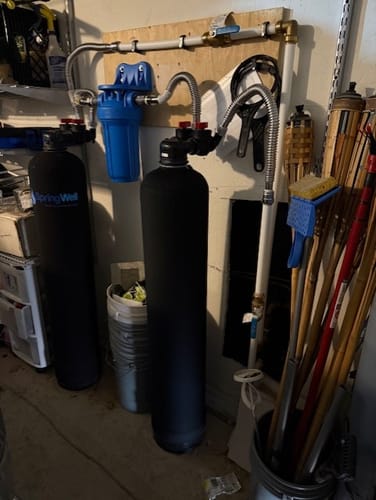
I conducted comprehensive water testing both before installation and at regular intervals afterward to document the system's performance objectively.
Baseline testing revealed our municipal water contained 0.9 ppm fluoride, 2.1 ppm total chlorine, and TDS levels averaging SoftPro Fluoride Filter 185 ppm. The chlorine was particularly noticeable in taste and odor, registering strong positive results on basic test strips.
After one week of operation, post-filtration testing showed dramatic improvements. Fluoride levels dropped to 0.15 ppm—an 83% reduction that brought our water well below the EPA's recommended maximum of 0.7 ppm. Total chlorine became undetectable using standard test strips, and the characteristic pool-like odor completely disappeared.
TDS levels decreased to 165 ppm, a modest but consistent reduction that indicated the system was removing dissolved contaminants without stripping beneficial minerals like calcium and magnesium that contribute to water's natural taste.
I tested pH levels and found them unchanged at 7.2-7.4, confirming that the filtration process wasn't making our water acidic or alkaline. This balanced pH protects our plumbing and appliances while maintaining water's natural characteristics.
Six months into operation, I retested everything and found consistent performance. Fluoride removal remained at 80-85%, chlorine elimination stayed at 100%, and flow rate maintained steady performance at our typical 8-12 GPM usage patterns.
The most noticeable improvement was in water taste and odor. Coffee and tea tasted dramatically better—my wife actually mentioned that she could taste subtle flavor notes in her morning brew that the chlorine had previously masked. Ice cubes became crystal clear, and the unpleasant aftertaste disappeared completely.
Our glassware emerged from the dishwasher spot-free more consistently, though this improvement was gradual over the first month as existing mineral deposits were slowly dissolved and removed.
Daily Living Impact and Family Benefits
The transformation in our daily water experience exceeded my expectations in several unexpected ways.
Shower experiences improved dramatically within the first week. The absence of chlorine odor made morning routines more pleasant, and both my wife and daughter noticed that their hair felt softer and more manageable. My daughter's dermatologist had actually recommended a whole house filter to address some minor skin irritation issues, and we saw improvements within about three weeks.
Cooking and food preparation benefited significantly. Pasta water no longer had the slight chemical taste we'd grown accustomed to, and vegetables retained their natural flavors more effectively. I'm an amateur home brewer, and the filtered water improved my beer quality noticeably—the absence of chlorine eliminated off-flavors that can develop during fermentation.
Our appliances showed gradual improvements. The dishwasher required descaling less frequently, and the water heater seemed to operate more efficiently. While I can't attribute all efficiency improvements to the filtration system, our monthly water heating costs decreased slightly over the first year.
House guests consistently commented on our water quality. My brother-in-law, who lives in a neighboring county with well water, mentioned that our tap water tasted better than the bottled water he typically purchases. This external validation confirmed that the improvements weren't just psychological adaptation.
Laundry results improved subtly. Whites stayed brighter longer, and colored fabrics seemed to retain their vibrancy better. These changes were gradual and might not be noticeable in a shorter trial period.
The most surprising benefit was peace of mind. Knowing that we'd removed the majority of fluoride and all detectable chlorine from our water supply eliminated a low-level concern I didn't realize I'd been carrying about our family's long-term exposure to water treatment chemicals.
Operating Costs and Maintenance Reality
Eighteen months of operation has provided clear data on the actual costs of owning this system.
The media replacement, which I completed in September 2024, cost $165 for both the catalytic carbon and bone char components. SoftPro shipped the media promptly, and I received detailed instructions for performing the replacement myself. The process took about two hours, including system sanitization and restart procedures.
Electricity consumption is minimal. The Fleck control valve draws power only during backwash and rinse cycles, consuming approximately $12-15 annually based on our local electricity rates of $0.14 per kWh.
Water usage for backwashing averages 35-40 gallons per cycle, occurring weekly. At Miami's current water rates, this adds approximately $35 annually to our utility bill. The backwash water isn't wasted—I redirect it to our landscape irrigation, providing chemical-free water for our plants.
Total annual operating costs average $145, breaking down to roughly $12 per month for filtered water throughout our entire home. When compared to purchasing bottled water for drinking and cooking alone, the system pays for itself within the first year of operation.
Maintenance requirements are genuinely minimal. Beyond the annual media replacement, I check the bypass valve quarterly and inspect connections for any signs of leaks or wear. The system has operated without any mechanical issues throughout its 18-month service life.
The Fleck controller maintains its programming through power outages using a built-in battery backup. We've experienced several brief outages during Miami's storm season, and the system resumed normal operation automatically when power was restored.
Honest Assessment: Limitations and Considerations
After 18 months of daily use, I can honestly discuss the system's limitations and areas where potential buyers should set realistic expectations.
The initial pressure drop was more noticeable than I anticipated. While 58 PSI remains adequate for all household needs, homeowners with already-marginal water pressure might need to consider a pressure boosting system. This additional cost wasn't part of my original budget planning.
Media replacement requires some technical comfort level. While SoftPro's instructions are thorough, the process involves handling 50-pound bags of media, sanitizing procedures, and proper restart protocols. Homeowners uncomfortable with basic plumbing tasks will need to budget for professional service calls.
The system doesn't address hardness issues. Our Miami water has moderate hardness levels (8-12 grains per gallon), and the catalytic carbon/bone char combination doesn't provide water softening. I've considered adding a separate softener, but the additional complexity and cost haven't justified the benefits for our family.
Fluoride removal efficiency gradually decreases over the media's life cycle. While fresh bone char removes 85-90% of fluoride, performance drops to 60-70% near replacement time. This means fluoride levels fluctuate between 0.15 ppm and 0.35 ppm throughout the media's service life.
The control valve programming, while functional, feels outdated compared to smart home integration trends. There's no WiFi connectivity or smartphone app for monitoring or control. For tech-savvy homeowners expecting modern interfaces, the basic LCD display and button controls might feel primitive.
Space requirements in our garage proved larger than anticipated. The 10" x 54" tank, plus bypass valve assembly and connecting pipes, occupies approximately 12 square feet of floor space. Urban homeowners with limited utility space should carefully measure before committing to installation.
Despite these limitations, the system's core performance—removing chlorine and reducing fluoride—has remained consistently excellent throughout our ownership period. These drawbacks are operational considerations rather than fundamental performance failures.